
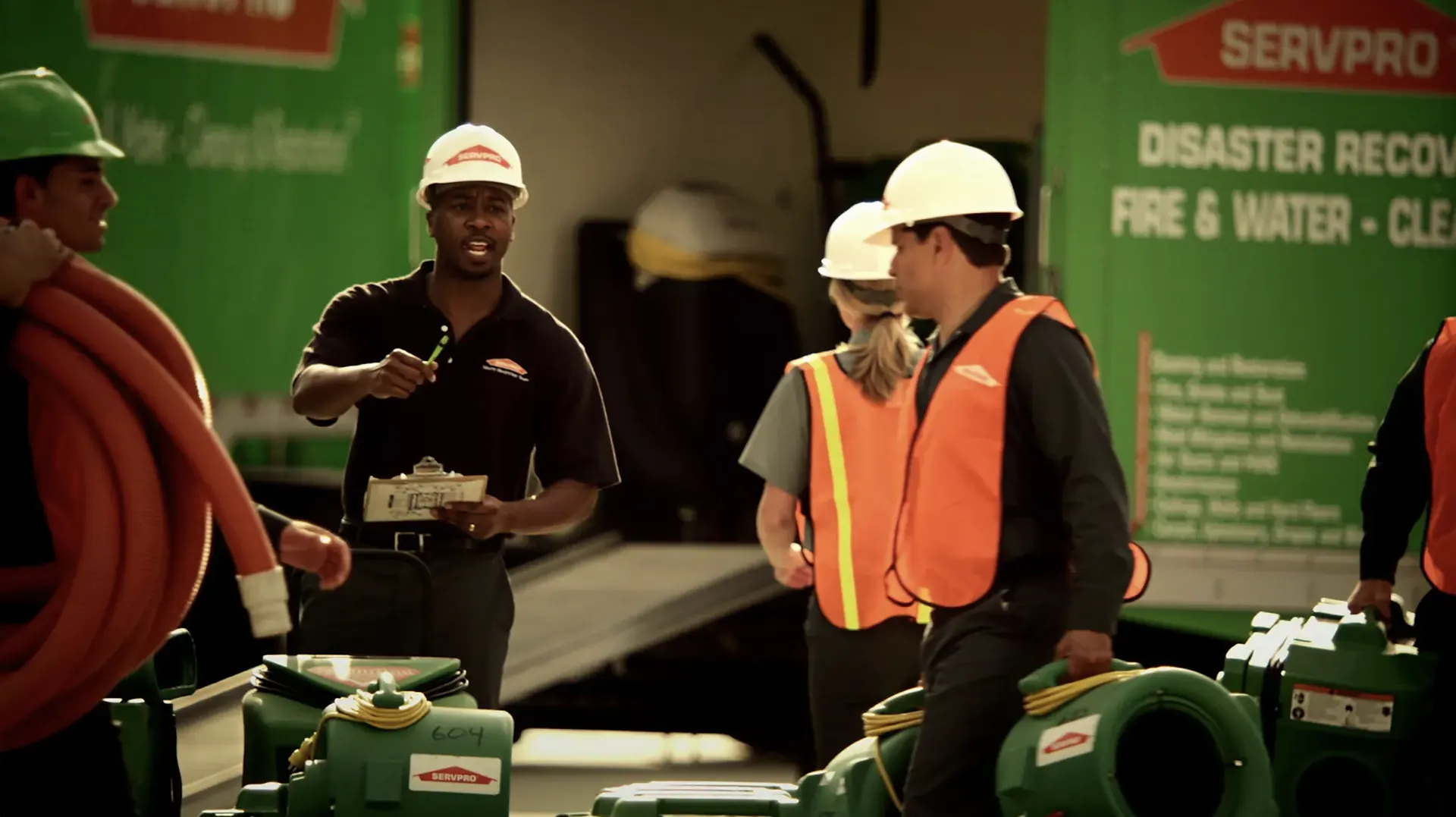
CASE STUDY · SERVPRO OF CHULA VISTA
from impressions to qualified jobs.
a paid acquisition rebuild that stopped counting cheap clicks and started measuring real customer demand.

173 → 247 inbound calls+
two months before against two months after, on the budget the franchise was already spending.
20 → 35 qualified leads+
calls the team could actually dispatch on, counted across every source rather than assigned to a channel. which lever did it is not separable, and nobody who tells you otherwise has measured it.
$14.73 → $9.45 cost per click+
cutting the wasted clicks pulled the average cost down by more than a third.
3.09 → 8.69% click through rate+
tighter targeting meant most of the people seeing the ads were actually looking for emergency restoration.
how these numbers were measured+
the two months before the rebuild against the two months after, on the same monthly budget, the same service area and the same phone setup.
qualified leads are calls the team could actually dispatch on, counted across every source rather than assigned to a channel. which lever produced each one is not separable, and nobody who tells you otherwise has measured it. cost per click and click-through rate describe the Google Ads account alone.
choose the short read, or open the full evidence.
01 / THE NUMBERS
two months either side of the rebuild
what changed was how the account was managed.
inbound calls: 173 before, 247 after.
qualified leads: 20 before, 35 after.
cost per click: $14.73 before, $9.45 after.
click through rate: 3.09% before, 8.69% after.
02 / THE MOMENT
the account was being run for volume
the dashboard said the campaign was working. the phones said something else.
the real problem was what the account was being told to chase. the budget was set up to generate impressions when it should have been generating qualified jobs. that's the part we rebuilt.
the operating context+
the previous agency optimized for the numbers that look good in a monthly report: a high call count, a low cost per click, lots of impressions. on paper it looked like the account was doing fine.
one campaign, over a four-week stretch, produced 1,355 impressions and 154 clicks, and two qualified leads came out the other end.
03 / THE DIAGNOSIS
a reporting win was hiding a demand problem
on their own none of these would sink an account. stacked together, they're why the spend wasn't producing work.
SCROLL SIDEWAYS TO COMPARE
| measure | WHAT THE MONTHLY REPORT SHOWED | WHAT WAS ACTUALLY HAPPENING |
|---|---|---|
| targeting | clicks, inside budget | a share of them from across the border in Mexico, logged as conversions, for a company that only works in San Diego County |
| keywords | a low cost per click | the budget sitting on branded and broad terms while water damage, fire and flood barely ran |
| conversions | 154 clicks from Google | button taps and clicks for directions. two of them were qualified |
| channel | Performance Max, optimized | optimizing for local visits, which counts foot traffic to a storefront, at a business that drives to the customer |
| visibility | a report every month | no way to see whether the account had been touched in between |
04 / WHAT WE BUILT
the three things we rebuilt
the budget was not the constraint. targeting, measurement and operating attention were.
targeting and keywords
separated real service intent from broad traffic, and reset the territory to where the franchise can actually work.
more on this
+
we rebuilt the keyword set around the searches people actually run during an emergency, and reset the geographic targeting to match the real service territory. the branded filler and the out-of-area traffic that had been padding the old numbers came out.
conversion tracking
counted sustained calls and qualified requests instead of proxy activity.
more on this
+
we set up real call tracking with a 60-second minimum, so a call only counts once someone stays on the line long enough to be a genuine inquiry. once Google was learning from real calls instead of stray taps, the automated bidding started chasing the right thing.
ongoing management
made search terms, lead quality and spend one weekly conversation.
more on this
+
someone works the account every week now, pruning negative keywords, adjusting bids, and keeping a live reporting view the owner can open whenever they want, instead of waiting on a monthly PDF after the fact.
05 / THE EVIDENCE
separate the report from business reality
the reported conversion count fell after the worst campaign was paused. at the same time, the phones produced more qualified work.
the four-week campaign
the report improved until someone asked what the calls were worth.
more on this
+
one Performance Max campaign, named by the previous agency for the local visits optimization goal, produced 1,355 impressions and 154 clicks over four weeks. two qualified leads came out the other end.
across the account, that same campaign reported 26,153 clicks at $0.03 and 281 conversions at $2.43. that is 91% of every conversion the account reported, from a campaign optimizing for foot traffic to a storefront at a business whose crews drive to the customer.
it is paused now. pausing it is why the reported conversion count fell through the floor while the phone rang more. the decline in the report was the measurement getting honest, not the account getting worse.
06 / THE TAKEAWAY
the takeaway
a dashboard is not evidence. the useful metric is the buyer action that moves the business, not the platform number that makes the report look healthy.
the operating implication+
a call is only worth paying for if it can turn into a job. call volume looks good on a report and is simple to inflate, which is exactly why so many accounts end up chasing it. we'd rather track the number that shows up in revenue: qualified leads.
nothing here is specific to restoration. any account that counts taps instead of conversations is being optimized toward taps, and the platform will keep getting better at delivering them.
A WORKING CONVERSATION